A pharmaceutical batch can fail an entire regulatory audit over something as small as a hairline crack in a wall joint collecting dust nobody noticed. In an industry where contamination isn't just a quality issue but a patient safety issue, the building envelope itself becomes part of the manufacturing process ,not just a shell around it. This is the exact problem that pharma cleanroom panels were engineered to solve: walls and ceilings that don't just enclose a space but actively support the sterility standards regulators demand.
For facility planners entering this space for the first time, the panel system can feel like a small line item buried in a much larger construction budget. In practice, it's one of the decisions with the longest downstream consequences ,get it wrong, and you're not just fixing a wall, you're potentially explaining a compliance failure to an auditor.
Why Standard Construction Materials Fall Short Here
Conventional wall finishes ,plaster, standard paint, even many powder,coated metal sheets ,all share a common flaw in cleanroom contexts: microscopic surface irregularities and joints that trap particulates, moisture, and eventually microbial growth. No amount of cleaning fully compensates for a surface that wasn't designed to resist contamination in the first place.
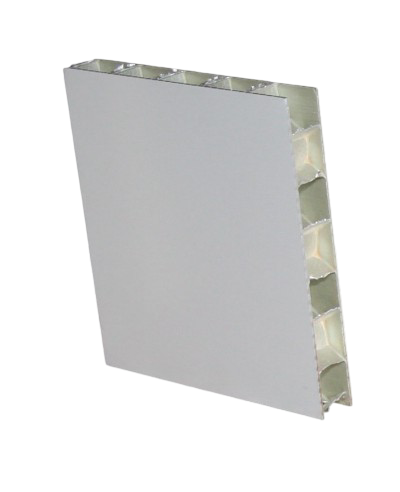
A properly engineered clean room sandwich panel solves this at the material level rather than relying on maintenance to catch up. The core insulation sits between two smooth, non,porous metal facings, factory,finished to a consistency that standard site,applied coatings simply can't replicate. Joints are designed with minimal, sealed gaps specifically to eliminate the crevices where contamination typically accumulates in conventional construction.
The Regulatory Reality Driving Adoption
Pharmaceutical manufacturing operates under some of the strictest facility compliance standards of any industry, and regulators increasingly scrutinize the building envelope itself during audits, not just the equipment and processes inside it. Cleanroom panels for pharmaceutical manufacturing are frequently specified with classification requirements in mind from day one, since retrofitting a facility to meet a higher cleanliness classification after construction is dramatically more expensive than designing for it upfront.
This regulatory pressure has pushed panel specification earlier into the project timeline than it used to sit. Facility architects and quality assurance teams now often collaborate on panel selection before construction begins, rather than treating it as a finishing decision made after the structural work is complete.
Biotech and Electronics Share More Than You'd Expect
Pharmaceutical manufacturing gets most of the attention in this category, but the underlying contamination control problem shows up in surprisingly different industries. Cleanroom panels for biotech labs face nearly identical requirements around particulate control and surface cleanability, since biological research and cell culture work are just as vulnerable to contamination as drug manufacturing.
Electronics manufacturing represents a related but distinct case. Cleanroom panels for electronics industry applications often prioritize static control alongside particulate cleanliness, since semiconductor and precision component manufacturing can be ruined by microscopic dust particles in ways that have nothing to do with biological contamination but everything to do with product yield and quality.
Food Processing: A Cleanroom Application Often Overlooked
Food safety regulation has tightened considerably in recent years, and many processing facilities now specify cleanroom,grade construction even without a formal pharmaceutical classification requirement. Cleanroom panels for food processing plants address many of the same concerns ,bacterial growth prevention, easy sanitation, and resistance to the moisture and temperature cycling common in food production environments.
This overlap makes sense once you consider the underlying physics: a wall surface that resists microbial growth in a pharmaceutical cleanroom performs the same function in a dairy processing facility or a packaged food manufacturing line, even though the regulatory framework driving the specification differs considerably between industries.
Hospitals and Healthcare Facilities Increasingly Specify the Same Systems
Operating theatres, isolation wards, and diagnostic labs face contamination control requirements that closely mirror pharmaceutical manufacturing, which is why cleanroom panels for hospitals have become increasingly common in healthcare construction over the past decade. The stakes here are immediate and human rather than regulatory,in,the,abstract ,a poorly controlled surgical environment carries direct infection risk for patients.
Healthcare facility planners typically weigh acoustic performance more heavily than a standard pharmaceutical cleanroom would, since hospital wards need to balance sterility requirements against patient comfort and noise control, adding another layer of specification complexity that pure manufacturing environments don't usually face.
Modular Construction Changes the Project Timeline Entirely
One of the more significant shifts in this category has been the move toward modular clean room panels that can be assembled and reconfigured considerably faster than traditional built,up cleanroom construction. This matters enormously for pharmaceutical companies needing to scale production capacity quickly or reconfigure a facility layout as manufacturing needs evolve.
Modular systems also simplify future expansion in a way permanent construction doesn't easily allow ,a facility can add cleanroom capacity incrementally as production scales, rather than committing to a fixed footprint that may prove too small or too large within a few years of initial construction.
Partition Systems and Internal Space Planning
Beyond the exterior envelope, internal space division within a cleanroom facility carries its own specification requirements. A clean room partition panel needs to maintain the same contamination control standards as the primary walls while also allowing for flexible reconfiguration as production lines change or expand, which is why these interior systems are typically engineered as a distinct but complementary product line to the main structural panels.
Getting the partition strategy right early in the design process avoids a common and costly mistake: facilities that treat interior walls as an afterthought often end up with contamination control gaps precisely at the junctions between primary structure and interior partitions.
What to Verify Before Choosing a Supplier
Not every panel marketed as cleanroom,grade actually meets the specific classification standard your facility requires, which makes supplier verification a genuinely critical step rather than a formality. Confirm that your clean room panel manufacturer can provide documented compliance with the specific ISO or GMP classification your project needs, along with material test data rather than general marketing claims.
It's also worth asking directly about joint sealing methodology and surface coating specifications, since these details determine real,world cleanability far more than the base panel material alone. A supplier who can walk through these specifics in technical detail, rather than deflecting to generic product literature, is generally the safer choice for a compliance,critical project.
Making the Investment Decision With Confidence
Cleanroom,grade construction costs more than standard industrial building materials, and that premium is easy to second,guess when budgets tighten during a project. But the actual cost comparison isn't cleanroom panels versus standard panels ,it's the panel investment versus the cost of a failed audit, a contaminated batch, or a facility retrofit forced by a regulatory finding after the fact.
Facilities that specify correctly from the outset consistently avoid the far larger expense of correcting contamination control gaps discovered during operation, when production downtime and remediation costs dwarf what proper specification would have cost at the construction stage.
Reach out to a specialist team today to discuss your facility's classification requirements and get a detailed cleanroom panel recommendation tailored to your project.
Frequently Asked Questions
What classification level do most pharmaceutical cleanrooms actually need?
This depends entirely on the manufacturing process ,sterile injectable production requires far stricter classification than packaging or labelling areas within the same facility. A qualified consultant should assess this based on your specific product and process rather than applying a blanket standard.
How long does cleanroom panel installation typically take compared to conventional construction?
Modular panel systems generally install significantly faster than built,up construction using plaster and site,applied finishes, often cutting weeks off a project timeline depending on facility size and complexity.
Can existing facilities be retrofitted with cleanroom panels, or is this only viable for new construction?
Retrofitting is common, particularly when a facility needs to upgrade its classification level to meet evolving regulatory requirements, though it typically requires more detailed planning than specifying panels during initial construction.
Do cleanroom panels require special maintenance compared to standard wall systems?
Routine cleaning protocols are more rigorous by design, but the panels themselves are engineered specifically to simplify this process, with smooth, sealed surfaces that resist the buildup conventional wall finishes are prone to.
Are cleanroom panels suitable for facilities outside the pharmaceutical industry?
Yes ,food processing, biotech research, electronics manufacturing, and healthcare facilities all commonly specify the same underlying panel technology, adapted to their specific classification and application requirements.