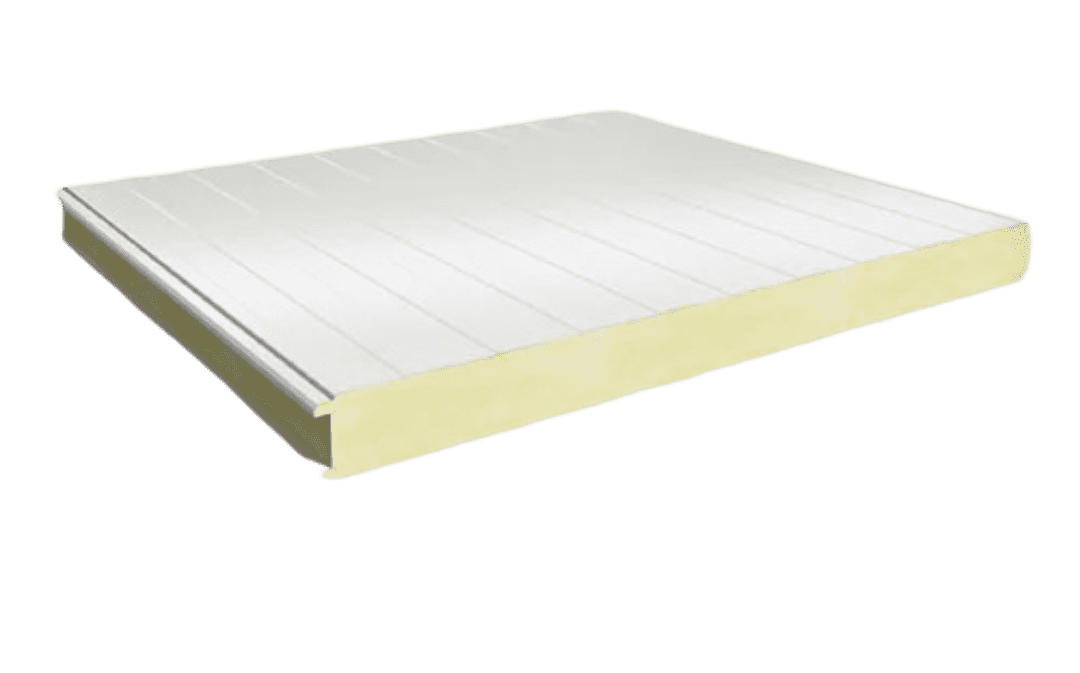
It might seem unusual that clean room construction would be a growing category in a state better known for steel plants and thermal power stations, but Raipur, Bhilai, Durg, Bilaspur, and Korba have quietly developed a real need for it. Steel and power operations increasingly run their own quality control labs, metallurgical testing facilities, and pharmaceutical-adjacent operations tied to industrial chemicals , all of which need environments considerably cleaner than a typical factory floor. That's the gap clean room sandwich panels fill in a state whose industrial identity is otherwise built on heavy manufacturing.
It's a pairing that surprises people until they think it through: a steel plant running metallurgical testing needs lab conditions just as controlled as a pharmaceutical facility does, even though almost nothing else about the two operations looks similar. Korba's thermal power corridor faces a comparable situation, with testing and quality assurance facilities requiring contamination control despite sitting in the middle of what's otherwise heavy industrial territory.
What Clean Room Construction Actually Requires
Building a functional clean room isn't simply a matter of adding extra insulation to a standard industrial wall. The requirements are genuinely different, and treating clean room construction as a variation on standard panelling rather than its own category tends to produce facilities that don't actually perform to the standard they were meant to meet.
Contamination Control Through Sealed Joints
Clean room panel manufacturers, including Mount Roofing & Structures, design joint systems specifically to prevent particulate infiltration, which is a meaningfully different engineering problem than simply keeping weather out. A joint that's perfectly adequate for a warehouse roof would likely fail a basic clean room contamination test.
Surface Finishes That Resist Microbial Growth
Clean room walls typically need non-porous, easily sanitised surfaces, which rules out several standard industrial coating options that work perfectly well elsewhere but weren't designed with sanitation in mind. This is one area where clean room panels specification diverges sharply from general industrial panelling, and it's often the detail that gets overlooked when a contractor more accustomed to standard factory construction takes on a clean room project without adjusting their usual material choices.
Positive Pressure and Airflow Compatibility
Clean rooms rely on controlled airflow and pressure differentials to keep contaminants out, and the wall and ceiling system needs to support that airflow design rather than work against it , a consideration that has no real equivalent in standard industrial construction.
Durability Under Repeated Sanitation Cycles
Facilities that clean room panels frequently undergo repeated chemical sanitisation, which some standard coatings degrade under faster than expected. Panels chosen for this environment need to be evaluated against sanitation frequency specifically, not just general wear resistance.
Insulation Consistency Across Controlled Environments
Beyond contamination control, clean rooms still need to maintain stable internal temperature and humidity, since both factors can affect testing accuracy and equipment calibration just as much as airborne particulates do. A clean room panel that handles contamination control well but performs inconsistently on the thermal side isn't really solving the full problem a facility actually has.
Where This Demand Is Concentrated
Metallurgical and Quality Testing Labs
Bhilai and Durg's steel manufacturing base increasingly relies on in-house metallurgical testing facilities that require clean room conditions for accurate material analysis, a requirement that's grown alongside quality certification demands across the industry.
Power Plant Testing and Monitoring Facilities
Korba's thermal power corridor has seen growing demand for modular clean room panels in facilities handling equipment calibration and emissions monitoring, where measurement accuracy depends on a controlled environment.
Pharmaceutical-Adjacent Industrial Chemical Facilities
Raipur and Bilaspur's broader industrial chemical operations, some tied loosely to pharmaceutical supply chains, have created a smaller but genuine market for clean room construction outside the steel and power sectors specifically.
Medizone Clean Panel Suppliers has positioned itself around exactly this cross-industry demand, working with steel plants, power facilities, and industrial chemical operations across Raipur, Bhilai, Durg, Bilaspur, and Korba that need clean room-grade construction despite operating in what looks, from the outside, like a heavy industrial state. Every clean room panel the dealer supplies comes from Mount Roofing & Structures, which keeps contamination-control specifications consistent regardless of which industry the facility ultimately serves.
A Specification Approach Worth Taking Seriously
Clean room construction in a state built around steel and power generation is admittedly a smaller, more specialised market than standard industrial roofing, but that specialisation is exactly why getting it right matters more, not less. Medizone Clean Panel Suppliers' work across this corridor is built entirely around Mount Roofing & Structures' manufacturing standard, giving metallurgical labs, power plant testing facilities, and industrial chemical operations alike a dependable foundation for environments that most of Chhattisgarh's industrial landscape was never originally built to accommodate. Facilities considering this kind of build are better served treating clean room specification as its own category from the outset , a starting point that Medizone Clean Panel Suppliers makes considerably easier to build from than piecing together a solution from standard industrial components.